Tyres, explained for UK drivers
How to Read a Tyre Size on the Sidewall
7 November 2026
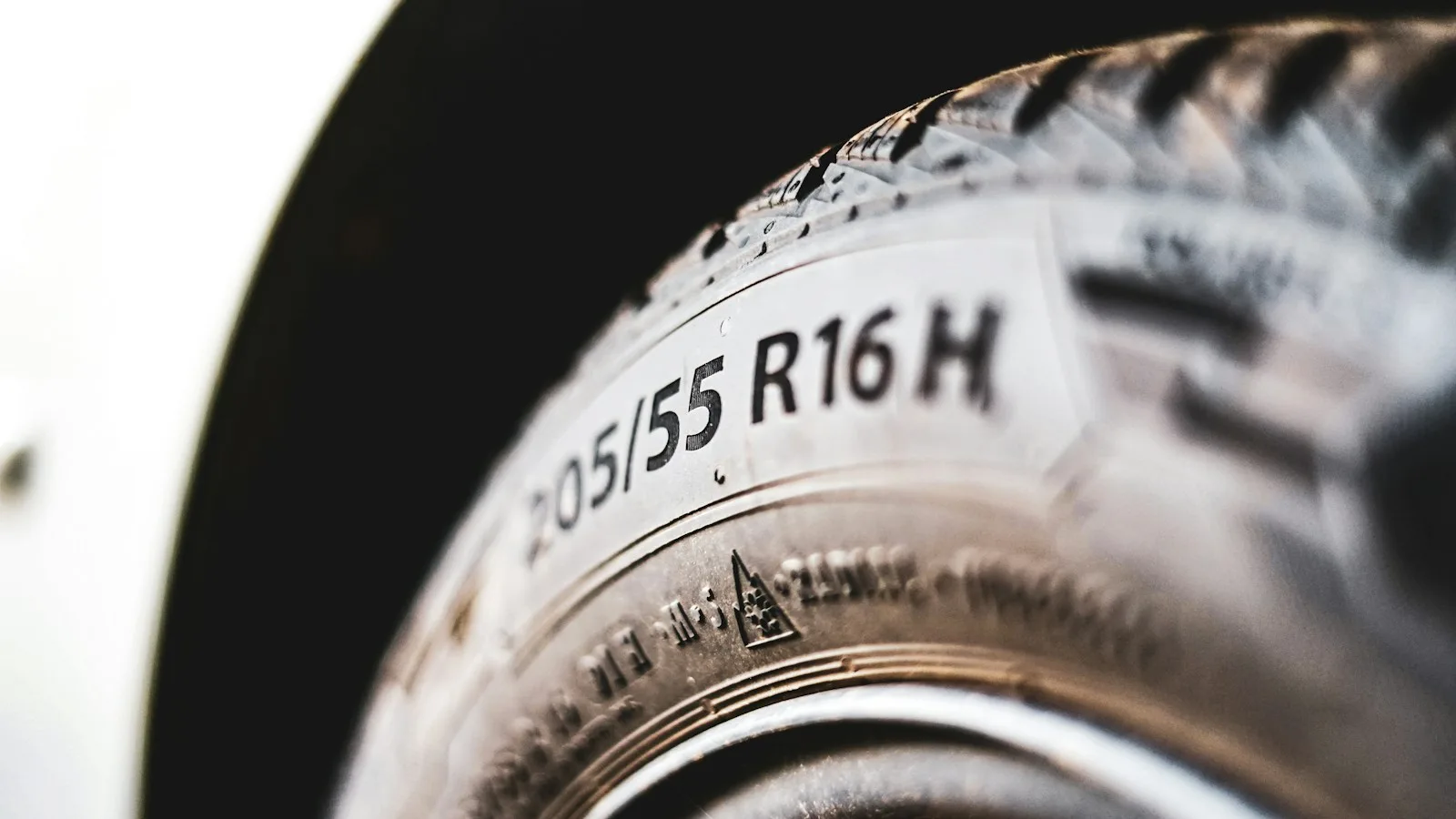
To read a tyre size on the sidewall, look for a code like 205/55 R16 91V. It tells you the tyre's width in millimetres, the height of the sidewall as a percentage of that width, its construction, the wheel size it fits in inches, and how much load and speed it's rated for. Here's how to read a tyre size on the sidewall, one part at a time.
Quick answer: In 205/55 R16 91V, 205 is the width in millimetres, 55 is the sidewall height as a percentage of the width, R means radial construction, 16 is the wheel diameter in inches, 91 is the load index and V is the speed rating. Always fit the size and ratings your car's maker specifies.
Key Takeaways
The first number is the tyre's width in millimetres.
The second number is the aspect ratio: the sidewall height as a percentage of the width.
R means radial, and the next number is the wheel diameter in inches.
The load index and speed letter show the maximum load and speed the tyre is built for.
The four-digit date code shows the week and year the tyre was made.
The size code, part by part
Take 205/55 R16 91V as an example.
Part | Example | What it means |
|---|---|---|
Width | 205 | The tyre is 205mm wide, measured across from sidewall to sidewall |
Aspect ratio | 55 | The sidewall height is 55% of the width |
Construction | R | Radial construction, used on almost all modern car tyres |
Wheel diameter | 16 | It fits a 16-inch wheel |
Load index | 91 | The maximum load per tyre (91 means 615kg) |
Speed rating | V | The maximum speed the tyre is built for (V means 149mph) |
A lower aspect ratio means a lower, stiffer sidewall. That's why sporty cars often run tyres like 225/40 R18, while a small hatchback might use 175/65 R14.
Load index and speed rating
The load index is a number that stands for the most weight each tyre can carry at its correct pressure. The speed rating is a letter for the highest speed the tyre is built to sustain.
Speed rating | Maximum speed |
|---|---|
T | 118mph (190km/h) |
H | 130mph (210km/h) |
V | 149mph (240km/h) |
W | 168mph (270km/h) |
Y | 186mph (300km/h) |
Your replacement tyres should have at least the load index and speed rating the vehicle maker specifies. If you see XL or Reinforced on the sidewall, the tyre is built to carry a higher load than a standard tyre of the same size.
The date code
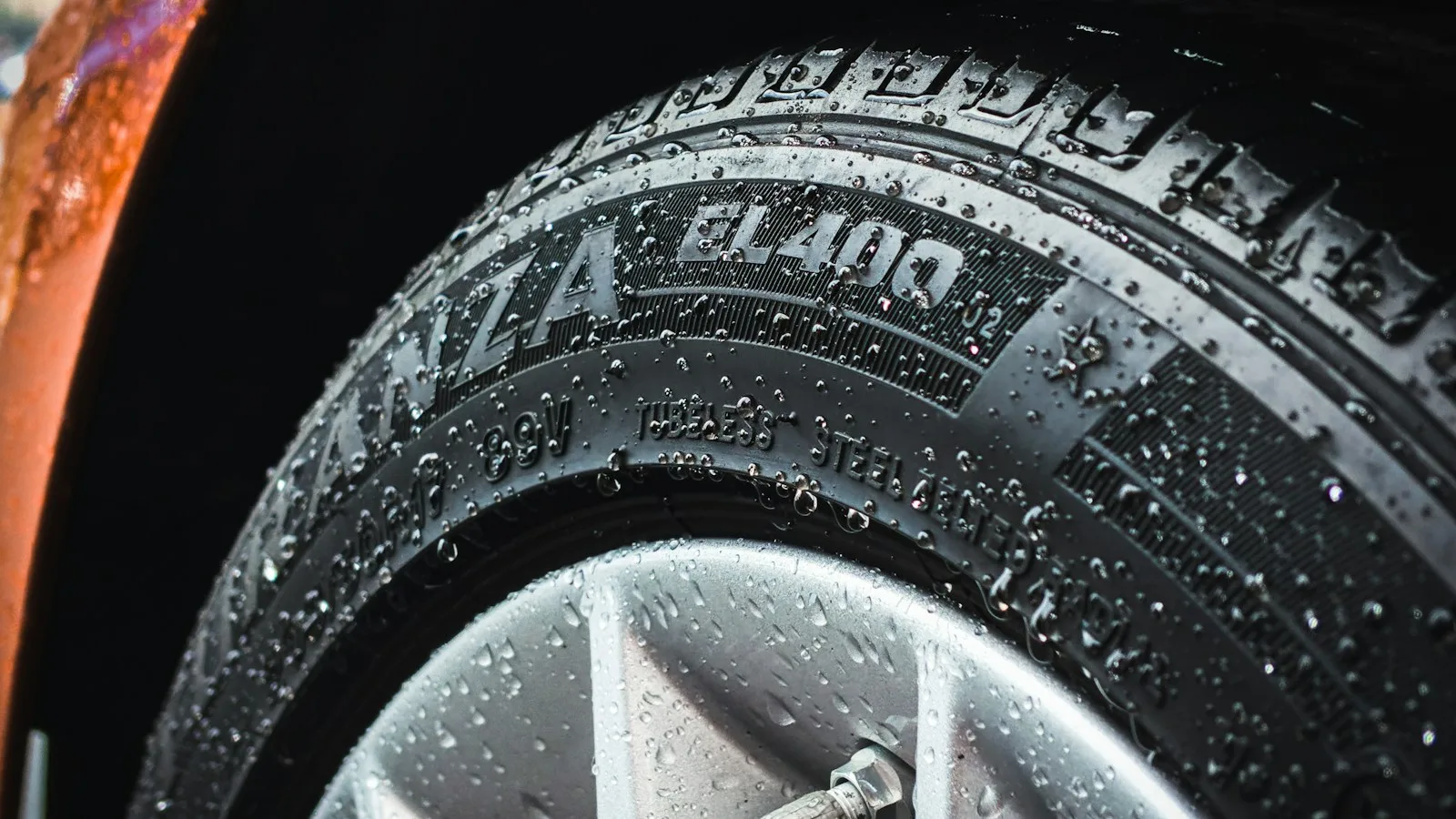
Look for a four-digit code, usually inside a small oval near the end of the DOT number. The first two digits are the week of manufacture and the last two are the year, so 3519 means week 35 of 2019. A three-digit code means the tyre was made before 2000.
For lorries over 3.5 tonnes and for buses, coaches and minibuses with more than 8 passenger seats, tyres over 10 years old are banned on the front axles. There's no age limit in law for car tyres, but it's still worth knowing how old yours are. Our guide to UK tyre law covers the age rule in full.
Other markings worth knowing
M+S means mud and snow. It's a marking chosen by the tyre maker.
A mountain with a snowflake (3PMSF) means the tyre has passed a standard snow performance test. Our guide to all-season and winter tyres explains the difference.
An arrow or the word "Rotation" shows the direction a directional tyre must turn.
"Outside" on an asymmetric tyre shows which side must face out.
An E with a number in a circle shows the tyre is approved for road use.
Run-flat markings vary by maker, and show the tyre can be driven for a limited distance after losing pressure. Our puncture repair guide explains why punctured run-flats are usually replaced.
How to find the right size for your car
Your car's handbook lists the correct tyre sizes, and many cars also have a label inside the driver's door frame or the fuel filler flap. The quickest check is often the tyres already fitted, but only if you're sure they're the right ones.
The same label usually lists the right tyre pressures. Our guide to TPMS warning lights explains how to check them.
Tyres on the same axle must be the same size, and radial and cross-ply tyres must not be mixed on the same axle. Both are major defects at the MOT.
While you're reading the sidewall, check the tread too. Our step-by-step guide to checking tread depth shows you how.
What does 205/55 R16 mean on a tyre?
205 is the width in millimetres, 55 is the sidewall height as a percentage of the width, R means radial and 16 is the wheel diameter in inches.
Can I fit a tyre with a higher speed rating?
Yes. A higher speed rating than the maker specifies is fine. Fitting a lower one than specified is the thing to avoid, so check your handbook.
Where is the date code on a tyre?
It's on the sidewall, usually as the last four digits of the DOT code, often inside an oval. It may only be on one side of the tyre.
Do I have to replace tyres in pairs?
Not by law, but tyres on the same axle must be the same size and construction. Many drivers replace them in pairs so they wear and grip evenly.
You can see the tyre checks a tester makes in section 5 of the MOT inspection manual. If you're unsure which size your car needs, ask a tyre fitter to confirm before you buy.